Book a Call
Rebranding a Grade II Listed London hotel: navigating the planning challenges
29th October 2026
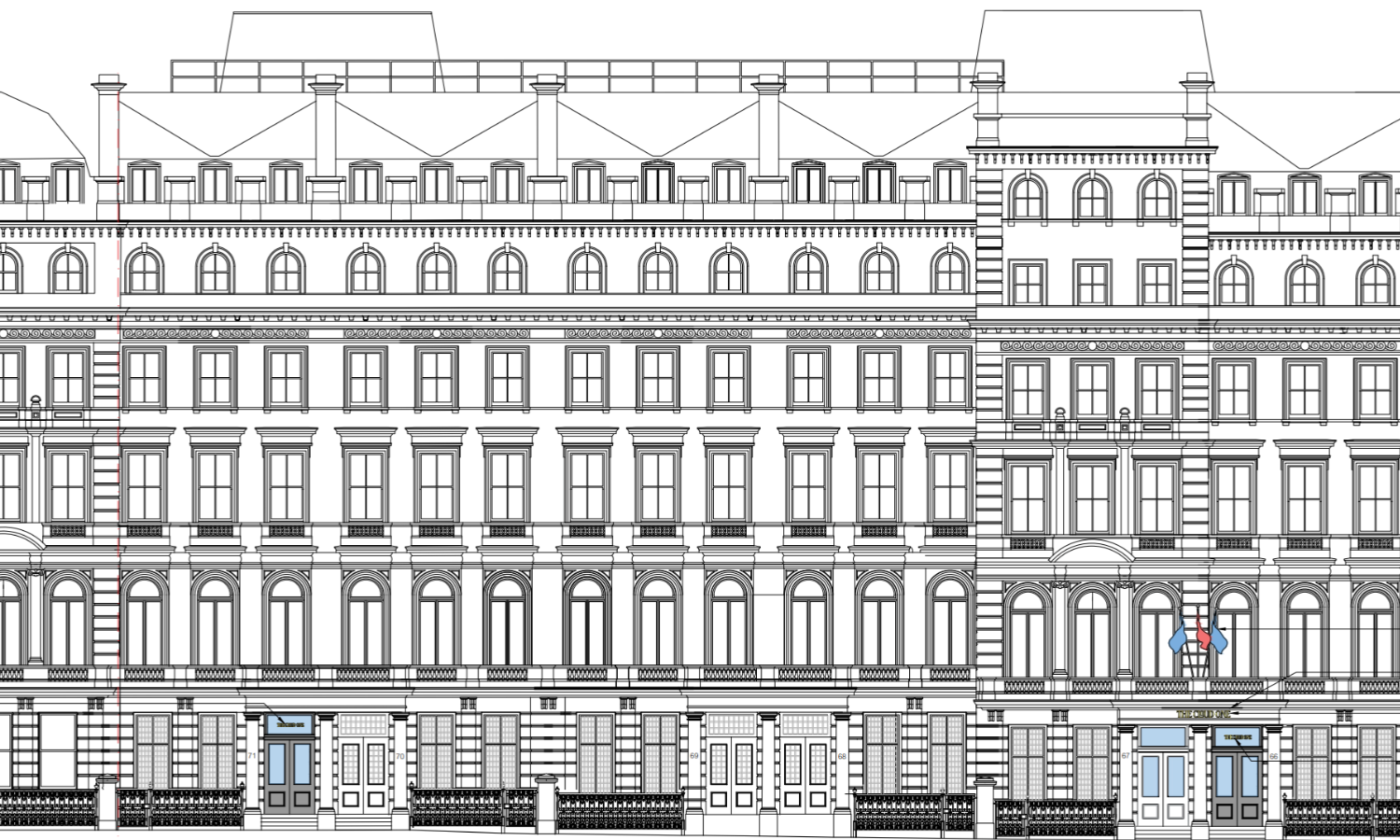
Securing consent for new hotel signage might sound straightforward. At a Grade II Listed Building in one of central London’s conservation areas, following an earlier refusal, there was rather more to it.
We have secured Listed Building Consent and Advertisement Consent for replacement signage at a stunning Listed Building and hotel in Westminster, supporting the hotel’s successful rebranding. The proposals included new fascia lettering and subtle branding within the fanlights above the entrance doors.
The project is an interesting example of how relatively small commercial changes can raise quite substantial planning questions, particularly where heritage and design are involved.
A sensitive setting for a new identity
The hotel forms part of a Grade II Listed terrace within the Bayswater Conservation Area. The buildings date from 1865 and form part of an architecturally distinctive stucco terrace designed by John Johnson.
For the hotel, bringing its new identity to the building therefore needed more than a straightforward change of sign. Given the Listed Building designation, the replacement signage and lighting required both Advertisement Consent and Listed Building Consent. The two applications were submitted together and assessed as linked proposals.
Using a planning refusal to secure an approval
This was not the first version of the scheme. Previous applications had been refused and it was following these that we were approached to assist. Our first step was to review the responses from Westminster City Council and identify whether there was any likelihood of securing planning permission for the proposed changes to support the rebranding of the hotel.
The original proposals were refused due to concerns regarding advertising flags, which were considered harmful to the Listed Building and conservation area. We therefore proposed a heritage-led strategy and worked proactively with the Council’s feedback and the project team. The revised scheme removed the problematic elements while retaining the signage that officers had already indicated was capable of being acceptable.
It is a useful reminder that a planning refusal does not necessarily mean the underlying project is unworkable. Sometimes the most productive response is to identify precisely what has caused the difficulty, understand what remains acceptable and reshape the proposals accordingly.
Making the heritage case for changes to a Listed London hotel
Working alongside Blake + Blake Architects, the resubmission was supported by a Heritage Statement examining both the significance of the Listed Building and the effect of the proposed changes. The assessment concluded that the works would preserve the building’s special interest and would have no adverse impact on the character and appearance of the Bayswater Conservation Area.
The Council ultimately went further in its assessment of the revised signage. Its officer report concluded that the proposed brass-finished signage was smaller and less extensive than the existing display and would be an improvement. It also concluded that the works would not harm the building’s special interest. In essence, the Project Team successfully delivered an enhancement to the building rather than simply a replacement sign and associated lighting.
In securing planning approval for our client, we demonstrated that contemporary hotel branding can be introduced sensitively within a highly constrained heritage setting, given the hotel’s location within both a Grade II Listed Building and the Bayswater Conservation Area.
Small changes can still require strategic town planning inputs
For hotels, shops and other businesses occupying historic buildings, signage performs a practical commercial role. But in a Listed Building or conservation area, introducing a contemporary brand needs to be balanced against the significance of the building and its surroundings.
In this instance, the successful solution was one of restraint: understand the heritage asset, respond to the Council’s earlier concerns and focus the revised scheme on the elements capable of being supported.
The result allows a London hotel to adopt its new identity while respecting the architecture that makes the building distinctive. For us, that is exactly where good planning advice adds value: not simply pursuing consent, but finding a route that works for both the building and the business.
We are delighted to have achieved a planning outcome that supports the continued investment and evolution of a landmark London hotel while preserving its historic significance.
Working with Plainview Planning
Not every commercial planning project is large, but that does not make the outcome any less important to the business behind it.
At Plainview Planning, we work with independent and boutique businesses on planning matters ranging from changes to existing premises and signage to changes of use and new commercial development. Where heritage considerations are involved, early planning advice can help identify potential constraints and establish a proportionate route towards consent.
As part of the wider McLoughlin Planning Group, we can also draw on broader planning expertise where a project grows in scale or complexity, while keeping our advice proportionate to the client and the project.
If you are planning changes to commercial premises and would like to understand whether planning, Listed Building Consent or Advertisement Consent may be required, contact us via our website, email enquiries@plainview.co.uk or call 01242 501003.
Content correct at the time of publication. For the most up-to-date advice or to discuss your project, please contact our team directly.
Image source: Blake + Blake Architects
Key Projects
Some of our clients