Book a Call
Planning permission outside the settlement boundary: how we secured approval for five homes near Chelmsford
1st May 2026
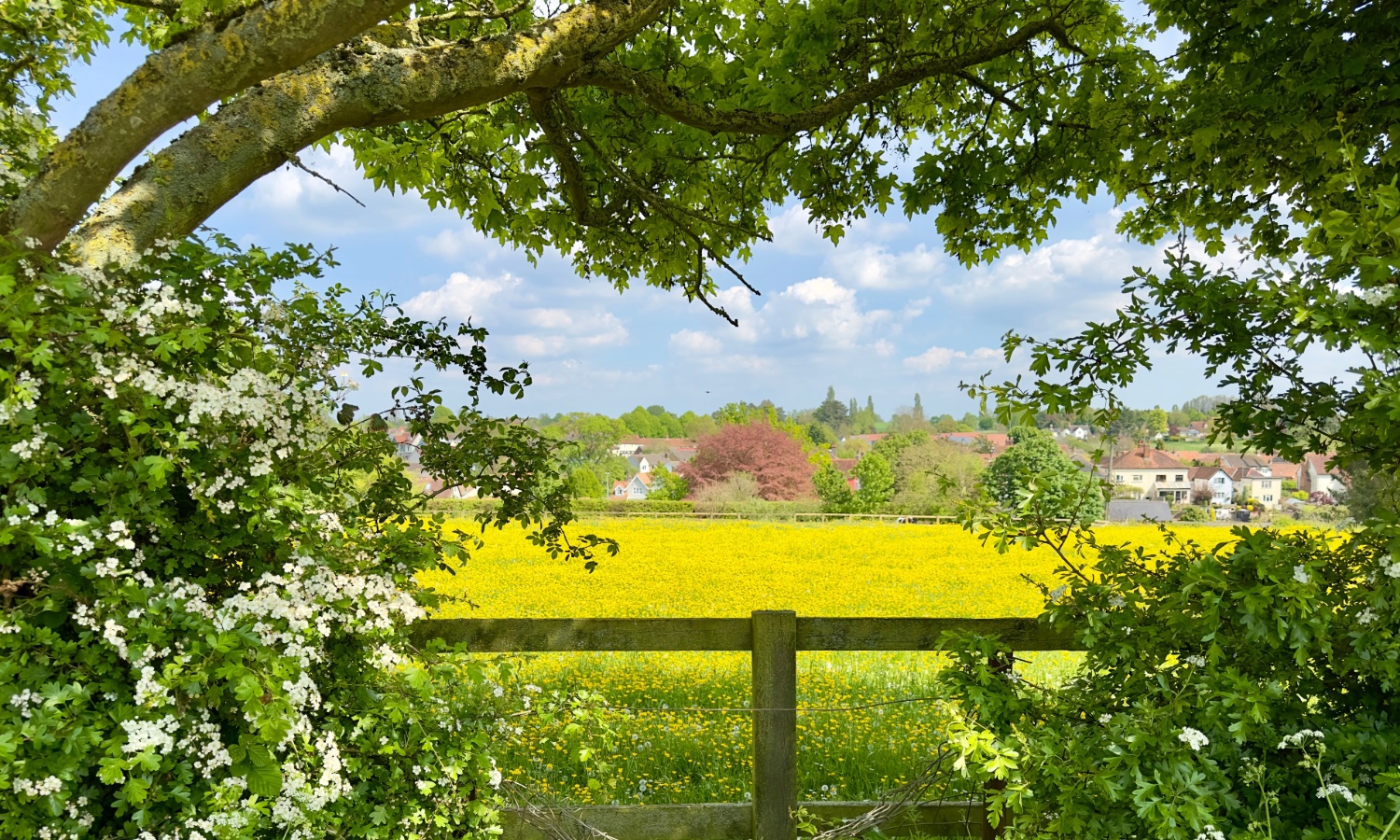
We have secured planning permission for five chalet-style family homes on the edge of Great Leighs, near Chelmsford. It was an inspired scheme with two key complications: a track record of refusals and a settlement boundary that bisects the plot. Local policy sought to resist development beyond settlement limits, so we took a nuanced, evidence-led approach, interrogating the planning history, assessing site context, and setting out the local and national policy position on housing delivery, to swing the planning balance in favour of the proposal.
The consent allows demolition of a storage building, workshop, garage and stables and the erection of five new homes, with generous parking, elegant landscaping and a new access in Great Leighs (Chelmsford).
The planning challenge: a site with a history of refusals
This was not a straightforward application. Similar proposals had been refused in the past, leaving a clear paper trail of concerns about principle, countryside character and policy compliance. Not to mention several refused appeals. Rather than rehearse old arguments, we identified why earlier schemes failed, mapped the relevant shifts in local and national policy, and built a strategy that dealt with the real points of tension in the planning balance.
Our strategy: planning history, policy nuance and a realistic planning balance
The defined settlement boundary cuts through the site; leaving it partly within Great Leighs and partly within the Rural Area. The site also sits close to a Strategic Growth location identified for longer-term housing development, which is a helpful contextual signal when considering how places evolve at the edge of settlement.
The proposed scheme sought to retain the existing dwelling and introduce five new homes to the eastern side, replacing the garage and larger outbuilding and extending onto land designated as Rural Area.
Because the settlement boundary runs across the plot, two of the five dwellings would sit within the defined settlement in policy terms. The more difficult question was the remaining three, located beyond the boundary.
Here, the planning history was key. We spent time with the applicant carefully going through the historic documents and identified earlier permissions for a builder’s yard and nursery use, relating to the wider site (both inside and outside the boundary). Although the commercial activities had ceased, the land had long been used as a residential garden, with established outbuildings on the Rural Area. Taken together, this evidence supported an argument that the area fell within the scope of previously developed land, an important consideration when weighing the principle of development in the countryside.
The planning balance: local plan policy and national housing delivery
However, the proposal was at odds with some key policies in the Local Plan’s approach to development beyond settlement boundaries. There were clear positives: a strong design response and boundary treatments; no material harm identified in relation to ecology or the nearby Grade II listed asset; and a sustainable location close to a village with everyday services. However, the policy tension remained, so the decision turned on the overall planning balance and how national policy should be applied.
Applying the tilted balance to five homes at Great Leighs
At the time of submission, the Council’s Local Plan was more than five years old and the authority could not demonstrate a five-year housing land supply. That brought NPPF paragraph 11(d) into play. We set out the scheme’s benefits clearly: five new homes in a location with access to services, strong design credentials, and a landscape-led approach that respects the rural setting. Set against that, the identified harms did not reach the ‘significant and demonstrable’ threshold required to justify refusal under the tilted balance.
NPPF paragraph 11(d): the ‘tilted balance’ in plain English
NPPF paragraph 11(d) is engaged where a council cannot demonstrate a five-year housing land supply, or where the most important policies for determining an application are out of date. In those circumstances, decision-makers apply the ‘tilted balance’: planning permission should be granted unless the harm would significantly and demonstrably outweigh the benefits when the National Planning Policy Framework is read as a whole, or unless specific NPPF policies indicateotherwise.
For small landowners and developers, this is often the hinge of an edge-of-settlement case. It does not make countryside policy disappear, and it does not guarantee approval. But it does mean that a well-evidenced scheme, with clear housing benefits and limited, properly mitigated impacts, can carry significant weight, even where there is conflict with older local plan policies.
Outcome: planning permission approved outside the settlement boundary
We were pleased to secure this positive outcome for our client. After a run of historic refusals on site, it would have been easy to assume the outcome was fixed, but by combining a clear reading of the planning record with a nuanced understanding of local and national policy, and by presenting a strategy that respected the site’s rural character while setting out the scheme’s benefits, we helped bring the project over the line.
We also appreciate the Case Officer’s constructive approach. They engaged positively, visited the site and discussed the practical implications of the proposal, helping to separate perceived impacts from actual ones. The architect from 2M Architects also made important design amendments during the application process to align with the useful Officer feedback.
Key takeaways for small landowners and developers
- Start with the refusals. If applicable to your site, then don’t necessarily assume a historic refusal is the end of the road. If there isn’t an in-principle objection to development on that particular site, then the reasons for refusal can help to provide an opportunity to present a clear, evidence-led response to why the site has failed before and how the latest scheme and policy situation overcomes these issues.
- Map the boundary and its consequences. Where the settlement boundary cuts across a plot, treat it as a planning fact to work with, not a line to argue away.
- Use planning history strategically. Historic permissions and lawful uses can materially change how land is categorised (including whether it can be argued as previously developed land).
- Know when the ‘tilted balance’ applies. If the local plan is out of date and the council lacks a five-year housing land supply, NPPF 11(d) can be decisive, but only for schemes with benefits that stand up to scrutiny.
- Design and landscape still matter. High-quality design, clear boundary treatments and credible mitigation are what keep impacts from outweighing benefits.
FAQ: development outside a settlement boundary
-
Yes, but it depends on the development plan policies, the site context and the overall planning balance. Where proposals conflict with countryside or settlement policies, the quality of evidence (including planning history) and the level of harm versus public benefits will be central to the decision.
-
Councils are expected to demonstrate enough deliverable housing sites to meet needs over the next five years. If they cannot, national policy may carry more weight and (in the right circumstances) the NPPF’s ‘tilted balance’ can apply, meaning permission should be granted unless harm significantly and demonstrably outweighs the benefits.
-
Broadly, it is land that has been occupied by a permanent structure and associated fixed surface infrastructure. In edge-of-settlement cases, establishing how an area has been used over time, the evidence of this and what has been lawfully permitted, can affect how the principle of development is assessed.
-
It can be relevant where the key policies for determining an application are out of date, including where a council cannot demonstrate a five-year housing land supply. Whether it applies (and how much weight it carries) is case-specific, so it should be tested carefully against the local plan, evidence base and site constraints.
Working with Plainview Planning on your development project
At Plainview Planning, we help homeowners, landowners and small developers unlock the potential of their sites. We specialise in householder applications, small housing schemes and boutique commercial projects, where careful analysis, creative thinking and a strong understanding of planning policy make a measurable difference.
We are part of the McLoughlin Planning Group, a wider team of chartered town planners providing strategic, commercially minded advice across England and Wales. This collaboration allows us to support projects at every scale, while ensuring clients work with the team best suited to their needs.
For larger, strategic or complex schemes, our colleagues at McLoughlin Planning can assist. For householder projects, smaller developments or independent commercial proposals, the Plainview Planning team would be delighted to help.
Navigating a development project, particularly outside a settlement boundary or within a rural area, can feel daunting. That is where we come in: we review the facts, test the policy position, and build a strategy to help bring your development aspirations forward.
If you are starting a development project and want up-to-date guidance on the best approach, contact us via our website contact form, email enquiries@plainview.co.uk or call 01242 501003. Please include your site address and a brief summary of your proposal so we can advise on next steps.
Content correct at the time of publication. For the most up-to-date advice or to discuss your project, please contact our team directly.
Key Projects
Some of our clients