Book a Call
Planning approved for a natural swimming pool in Stroud
1st May 2025
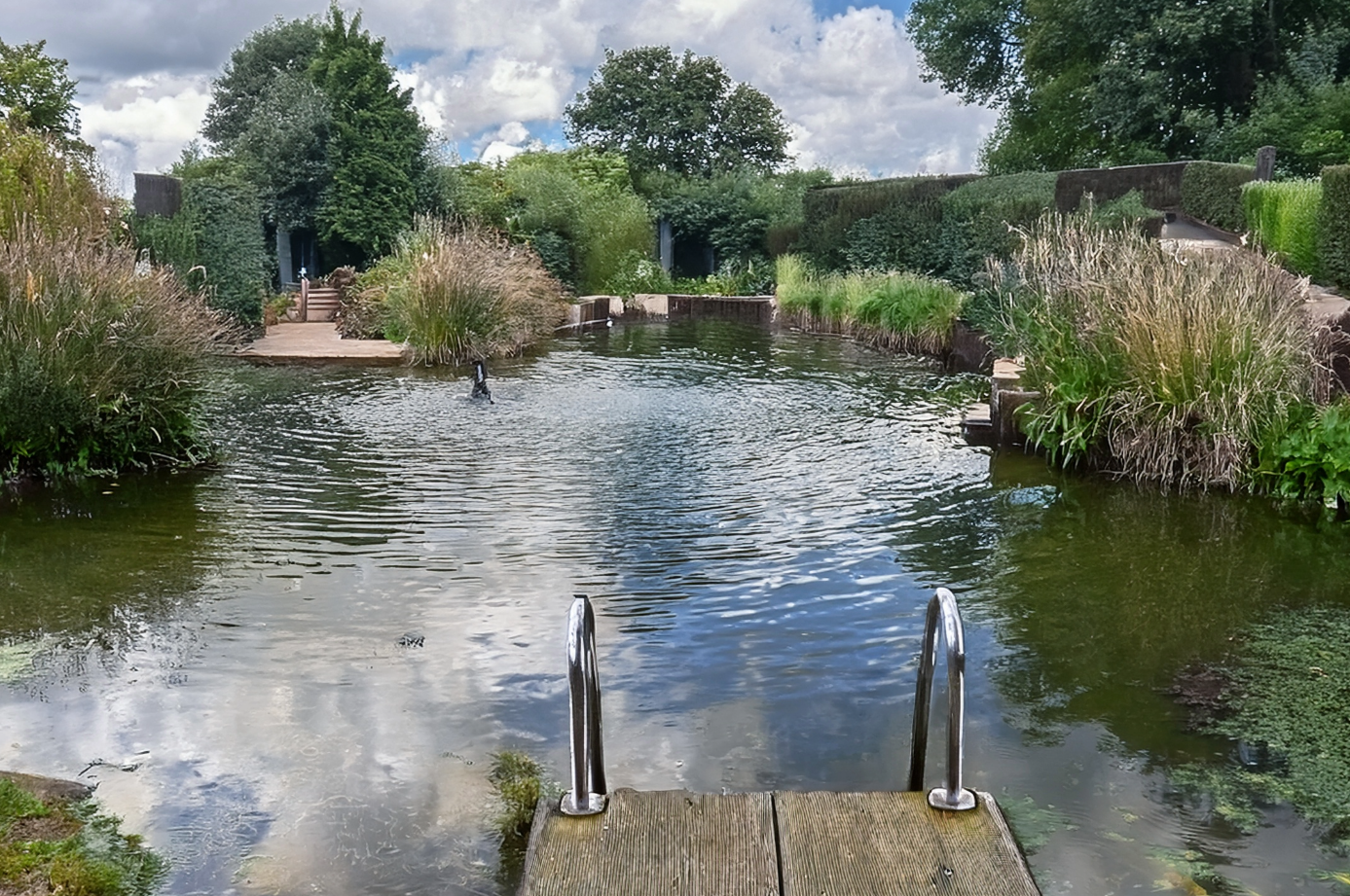
We have secured planning approval for a natural swimming pool with hard and soft landscaping, decking and a hot tub in a stunning countryside location near Stroud. Our strategic approach and nuanced understanding of planning policy was key, paving the way for a successful outcome for our client.
Securing planning permission for a natural swimming pool
This project was very complex, given the site’s location outside of a defined settlement boundary, within open countryside and within the Cotswold National Landscape (formerly the Cotswolds Area of Natural Beauty (AONB)). Furthermore, the grounds of the house comprised a 1.6-hectare plot of formal gardens, wildflower meadows, woodland areas and paddocks.
Given the challenges on site, our client had sought guidance from a pre-application meeting and on the back of this, had submitted two applications for the project which then had to be withdrawn as the case officer had advised a refusal would be forthcoming.
Unsure how to progress things, we were approached to assist. We provided a full review of the project, analysis of local policy and relevant precedents, and interrogation of case law. This culminated in the creation of planning strategy that would de-risk the application proposal whilst concurrently maximising the chances of successfully securing permission.
When a planning consultant can make all the difference – turning a potential refusal into a planning approval
The proposals and been carefully designed to have limited visual impact and through chemical free filtration and wildlife friendly planting, would enhance biodiversity on site. However, given the rural nature of the site, the proposals were also potentially contrary to local planning policy and the onus would therefore be on us, acting on behalf of the applicant, to demonstrate that the biodiversity gains would outweigh the policy conflict, a challenging proposition.
A fresh approach was needed. The pre-app response had suggested that proving that the site was in residential curtilage might be a way forward and referenced a local policy that might support this. But upon examination of the policy, we identified that the pre-app advice given had incorrectly defined and applied this. The policy in fact made no direct mention of curtilage. Our analysis of it suggested that it was instead referring to residential gardens more broadly. This would in part explain why the subsequent applications had had to be withdrawn.
What is residential curtilage?
In essence, residential curtilage is the immediate area of land surrounding a dwelling. It is worth noting that residential curtilage is not a ‘land use’ as set out in the Use Classes Order. Indeed, a residential garden use of land does not necessarily equate to it falling within the ‘curtilage’ of a dwelling house. The courts have held that whether or not land falls within the curtilage of a dwelling house is a matter of fact and degree in each particular case. The legal principles set out in relevant High Court cases appear to refer to three relevant factors, namely: (1) the physical layout; (2) ownership, past and present; and (3) use or function, past and present.
Whilst we could put forward a strong case for the Site being within the residential curtilage, in order to meet local policy requirements what we needed to do was establish the lawful use of the land as garden instead. As such, we set about preparing a CLEUD (Certificate of Lawfulness of Existing Use or Development) to prove that the site had been in use as a residential garden for in excess of 10 years.
What is a CLEUD?
A CLEUD is a legal determination based on the facts to establish whether the stated use is lawful and therefore beyond the scope of enforcement action – the test of the evidence is ‘on the balance of probability’; rather than the stricter criminal test of ‘beyond reasonable doubt’. It is therefore up to the applicant to provide enough quality, continuous evidence to help the Council make a positive determination.
One of our key roles in this type of application is to assess the quality of evidence received. In this instance, we reviewed a significant quantum of evidence to support the 10-year requirements, a combination of images, photos, marketing data, sales particulars, and statutory declarations. We then ensured clear presentation of the facts supported by a comprehensive explanatory document and were delighted to receive confirmation that site was deemed to be in use as garden land.
This confirmation of the lawful use of the land as residential provided the platform from which to launch a planning application for the natural swimming pool and associated ancillary works against less onerous policy requirements. This application was subsequently approved in a timely manner.
We are so pleased that we were able to navigate this project to a successful conclusion for our client and we can’t wait to see the finished development!
How a planning consultant can help
If you need planning support with your development project – including support with a pre-application meeting, a development review, policy analysis, preparing a comprehensive planning strategy, CLEUDs, and planning applications then we would be delighted to help. Feel free to contact us to discuss your requirements in more detail and we can explore how we can best assist you.
About us
We are Plainview Planning, now part of McLoughlin Planning – a solutions orientated, experienced and knowledgeable team of planning consultants. If you need professional and informed planning support with your development project, then contact our team via enquiries@plainview.co.uk, or call us on 01242 501003, providing the site address and a brief overview of your project. We look forward to helping you.
We value your privacy and any information which you provide will not be shared outside of our company and will only be used in relation to your enquiry.
As ever – the content of this article is correct at the time of publication, but for the most up to date information on planning topics and policy queries, contact our team.
Project Team
- Plainview Planning Ltd (Planning Consultants)
- Fever Few (Garden Design)
- Pure Water Pools (Drainage)
- Ecological Matters (Ecology)
Key Projects
Some of our clients