Book a Call
From planning enforcement uncertainty to a secure family home: a converted barn’s route to lawfulness
11th November 2026
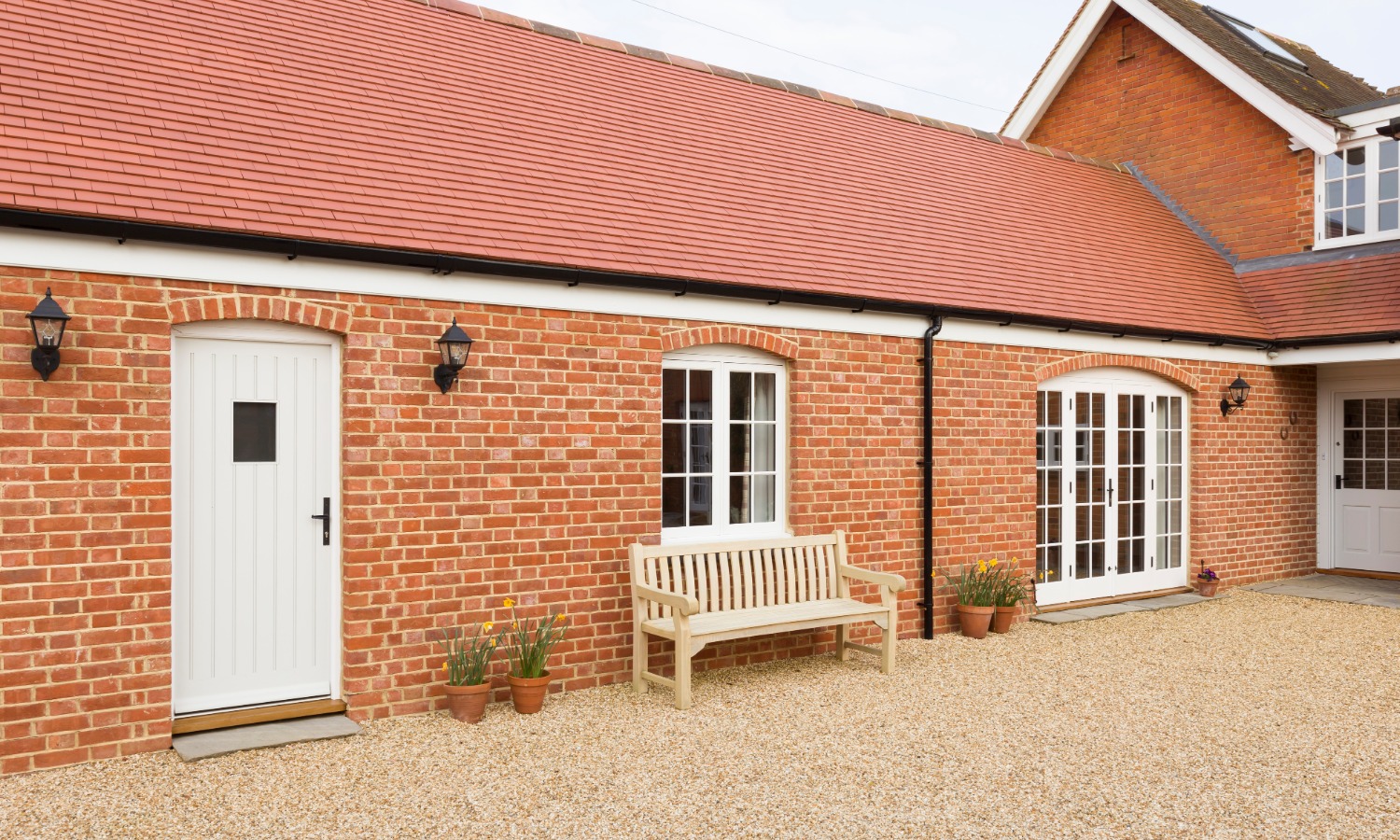
A converted agricultural building in Sussex had become a much-loved family home. But the dwelling as built did not match the plans approved through Class Q. Our team developed a careful, evidence-led planning strategy which addressed the council’s legitimate concerns and ultimately secured a Certificate of Lawfulness of Existing Use or Development (CLEUD).
Planning enforcement is often described in stark terms: planning breach, enforcement notice, compliance, enforcement appeal. For the people involved, however, it can be far more personal. In this case, the building at the centre of the dispute was not an abstract parcel of land, but rather someone’s home.
The eventual solution did not come from ignoring the problem or treating the council as an adversary. Instead, the key to unlocking the planning issue came from understanding precisely what had happened, separating the different planning issues, assembling reliable evidence and engaging constructively with the enforcement team and planning officers.
When the approved scheme is not built out according to the plans
The barn had originally benefited from the Class Q route for conversion to residential use. Class Q is a form of permitted development which can allow qualifying agricultural buildings to change to dwellinghouse use, subject to detailed limitations and a prior-approval process.
However, a prior approval is not a permission to build something broadly similar. The finished development needs to remain within the scope of the Class Q right and the details that were approved. In this case, the conversion had not been carried out in accordance with the approved plans, which left the home’s planning status exposed.
Planning enforcement should solve problems, not be punitive
Planning control has an important part to play in our built environment. Without it, poorly considered development can harm living standards, working environments, individuals, communities, landscapes, heritage and confidence in the planning system, to name but a few examples. But national guidance is equally clear that councils have discretion and should act proportionately. It also recognises that resolving a breach informally may provide the quickest and most lasting remedy, including where a genuine mistake has occurred.
That principle certainly shaped our approach, and our objective was to establish through clear communication, what needed to be remedied, what could properly be retained and what evidence would be required to put the residential use on a secure footing.
What does a CLEUD actually do?
A Certificate of Lawfulness of Existing Use or Development (CLEUD), does not grant a fresh planning permission. Instead, it gives formal confirmation that an existing use or development is lawful for planning purposes.
As such, a council determining a CLEUD is not deciding whether it likes the development or would approve it today. Rather, it is considering the facts as presented and the relevant law. Therefore, the onus is on the applicant to describe precisely what is to be certificated and provide sufficiently clear evidence to justify the CLEUD. The normal evidential legal test for this is the balance of probability: is the applicant’s account more likely than not to be correct?
This makes preparation particularly important. For example, a vague description, an incomplete chronology or plans that do not accurately identify the land can undermine an otherwise credible case.
Transitional arrangements and the former four-year rule
This case also required care because the law on enforcement time limits changed on 25th April 2024. Before that date, unauthorised operational development or a change of use of a building to a single dwellinghouse could, subject to important qualifications, become immune from enforcement after four years. For breaches occurring or substantially completed on or after 25th April 2024, the relevant period is now generally ten years.
The old rule has not, however, disappeared retrospectively in every case. The 2024 commencement regulations provide transitional protection and our earlier explanation of the change in an article titled: Planning enforcement: 25 April 2024 marks the end of the four-year rule, sets out that important distinction.
This case fell within that transitional territory, and the 2026 application sought to demonstrate that the building had already been built out and in use as a family home pre the 25th April 2024.
Anyone considering a similar application should obtain advice on their own dates and circumstances. The difference between activity before and after 25th April 2024 can fundamentally change the evidence required and the period that must be demonstrated.
What is the balance of probability for a CLEUD
A sound CLEUD application does not simply assert that a use has continued, it needs to demonstrate it. As such, our team reviewed the family’s evidence and organised it into a coherent application package. The documented evidence included electricity and council-tax bills, utility records, a statutory declaration, a supporting statement from a neighbour and historic Google mapping information.
The value of that work lay partly in what was submitted, but also in what was challenged before submission. This was important as some LPAs can do their own independent checks. We were meticulous in our analysis of the evidence, interrogating it for continuity, thoroughly reviewing plans, and raising questions if anything seemed unclear or to undermine the quality of the evidence. This then fed into the narrative we provided to support the evidence base.
Such scrutiny was especially important when defining the residential curtilage, the land properly associated with the dwelling. Following discussion with the council, the proposed red line was reduced to the limited areas evidenced as having been regularly used for domestic purposes, such as the patio, washing area and parking. Land in the family’s ownership but outside the claimed residential curtilage was shown separately, while the shared access to the road was expressly incorporated.
This was not a drawing exercise, rather the certificate would define what was lawful. An over-ambitious boundary could have weakened the application; an incomplete one could have left the approved home without a properly identified access or usable domestic area. Our use of proportionality strengthened the case.
The planning decision and what it meant to our client
We were delighted to secure confirmation that the certificate had been granted, and in a timely manner. For our client, the significance went well beyond the conclusion of a planning issue. As they explain in their very kind testimonial:
“From our very first conversation through to the successful outcome, Marcia, Chris and the team have been exceptional. They communicated with us every step of the way, always responding promptly to our questions and explaining everything in a clear and reassuring manner. What initially felt like a daunting and uncertain process became far more manageable thanks to their expertise, professionalism, and genuine care.
After years of uncertainty, they achieved the outcome our family had been hoping for by successfully securing a Certificate of Lawful Existing Use. This has given us the certainty we needed and allows us to move forward with confidence.
We are incredibly grateful for all of their hard work, dedication and support throughout the process. I would have no hesitation whatsoever in recommending Marcia, Chris and the team to anyone seeking planning advice or assistance. They are knowledgeable, approachable and deliver exactly what they promise. Thank you again.”
What other homeowners can learn from this case
Do not ignore early enforcement contact: An initial enquiry does not necessarily mean that formal action is inevitable. But delay can reduce the room for negotiation and make a manageable issue more difficult. Early engagement helps establish the alleged breach, the planning harm, if any, and the realistic routes to resolution.
Check what was approved against what was built: A permission or prior approval is only as safe as its implementation. If the finished building, use, access, boundary or curtilage differs from the approved application, obtain advice before making further changes or submitting another application.
Evidence matters more than assertion: For a CLEUD or Lawful Development Certificate (LDC), a convincing account should be supported by dated and mutually consistent material. Bills, photographs, official records, declarations and third-party statements can all be useful, but their relevance and continuity and the narrative that supports them, matter more than sheer volume.
Define the land carefully: The red line is not an administrative afterthought. It identifies the land to which the application and any resulting certificate relate. Access, parking, gardens and other domestic areas should be included only where the evidence supports their claimed use.
Choose the route before choosing the paperwork: A retrospective planning application, a CLEUD, negotiation or an enforcement appeal each answers a different question. The right strategy depends on the planning history, the evidence, the nature of any harm and whether formal action has already been taken. Our Certificate of Lawfulness service provides further explanation of the types of route available and when to use them.
A measured route through a difficult problem
This result was secured by distinguishing the legitimate planning issues from the emotion surrounding them, remedying what needed to be addressed and building a precise evidential case for what could lawfully remain.
For a family who had lived with uncertainty for years, the certificate provided something simple but invaluable: confidence that their home’s planning status was finally secure.
Working with Plainview Planning
If you have received an enforcement letter, discovered that a development differs from its approved plans or need to establish whether a long-standing use is lawful, contact Plainview Planning for clear, practical advice before taking the next step.
At Plainview Planning, we work with individual homeowners, small developers and independent / boutique businesses on planning matters ranging from initial planning appraisals through to planning and enforcement appeals.
As part of the wider McLoughlin Planning Group, we can also draw on broader planning expertise where a project grows in scale or complexity, while keeping our advice proportionate to the client and the project.
If you need planning support, contact us via our website, email enquiries@plainview.co.uk or call 01242 501003 to discuss your project. To help us make the initial conversation as useful as possible, please provide the site address, an outline of your development aspirations and details of any contact you have had with your local planning authority.
Content correct at the time of publication. For the most up-to-date advice or to discuss your project, please contact our team directly.
Key Projects
Some of our clients